.avif)
Popup Strategies That Actually Convert: How to Grow Your Shopify Email List Without Annoying Your Visitors


Introduction: The Popup Paradox in Ecommerce
Popups have a reputation problem. Ask most onlineshoppers about popups and they will tell you they are annoying, intrusive, andthe worst part of the internet. Ask most ecommerce marketers about popups andthey will tell you popups are their number one tool for list growth, oftenconverting three to ten times better than embedded signup forms.
Both perspectives are correct, and that is the popupparadox. Poorly implemented popups are genuinely annoying and can hurt yourconversion rate, drive visitors away, and damage your brand perception. Butstrategically designed popups, shown to the right people at the right time withthe right offer, are incredibly effective at capturing email addresses anddriving immediate revenue.
The difference between a popup that converts at 1% and one that converts at 8% is not luck. It is strategy. In this article, we will break down the science and art of high-converting popups for Shopify stores, covering everything from timing and targeting to offer strategy and design best practices. You will learn how to grow your email list aggressively without sacrificing the shopping experience.
Why Your Current Popup Is ProbablyUnderperforming
Most Shopify stores run a single generic popup that appears immediately when someone lands on the site, offers a flat 10% discounting exchange for an email address, and shows to every visitor regardless of traffic source or behavior. This default approach leaves enormous value on the table.
The first problem is timing. An immediate popup interrupts the visitor before they have had a chance to understand what your store sells or why they should care. You are asking for something, their email address, before providing any value. This creates friction and leads to high dismissal rates.
The second problem is targeting. Showing the same popup to a first-time visitor from a Facebook ad and a returning customer who has already made three purchases makes no sense. These visitors have completely different needs, different levels of brand awareness, and different motivations. A one-size-fits-all popup fails to speak to either of them effectively.
The third problem is the offer itself. While a 10%discount is fine, it is also completely unremarkable. Every store offers 10%off for email signups. When your offer looks identical to every other popup on the internet, there is no compelling reason for a visitor to act.
The stores that see the highest popup conversion rates approach each of these elements, timing, targeting, and offer, as independent variables to optimize. Let us look at each one in detail.
Timing Strategies: When to Show Your Popup for Maximum Impact
The timing of your popup dramatically impacts its conversion rate. Getting this right is one of the highest-leverage changes you can make, and the data consistently shows that the default approach of showing a popup immediately on page load is suboptimal.
Exit-intent popups trigger when a visitor's cursor movestoward the browser's close button or address bar, signaling that they are aboutto leave. Because these popups appear at the moment of departure rather thanarrival, they do not interrupt the browsing experience. Exit-intent popupstypically convert 2% to 4% on desktop, which is competitive with or better thantimed popups without the negative impact on user experience.
Time-delayed popups appear after a visitor has spent a set amount of time on the site. The optimal delay varies by store and traffic source but generally falls between 15 and 30 seconds. This gives the visitor enough time to browse and demonstrate interest before being presented with the offer. Showing a popup after 20 seconds to a visitor who has been actively browsing product pages is a fundamentally different experience than interrupting someone the instant they arrive.
Scroll-based triggers show the popup after a visitor has scrolled a certain percentage down a page. This is particularly effective on product pages and blog content because scrolling indicates active engagement with the content. Triggering a popup at 50% scroll depth on a product page targets visitors who are genuinely interested in the product they are viewing.
For Shopify stores using Klaviyo, you can combine these triggers with behavioral conditions. For example, show an exit-intent popup only to visitors who have viewed at least two product pages. Or show a timed popup after 20 seconds but only on collection pages. These combinations allow you to target high-intent visitors while leaving casual browsers undisturbed.
On mobile, exit-intent detection does not work the same way as desktop. For mobile visitors, scroll-based triggers and time delays are your primary timing tools. Consider using a banner-style form that slides up from the bottom of the screen rather than a full-screen popup on mobile, as this is less disruptive to the touch-based browsing experience.
Targeting: Showing the Right Popup to the Right Visitor
Advanced targeting transforms popups from a blunt instrument into a precision tool. Modern popup platforms, including Klaviyo's built-in forms, allow you to define detailed targeting rules that ensure each visitor sees the most relevant offer.
New visitors versus returning visitors is the most fundamental targeting distinction. First-time visitors need a different approach than returning visitors who are already familiar with your brand. New visitors respond best to welcome offers that reduce the risk of a first purchase, like a percentage discount or free shipping. Returning visitors who have not yet purchased may respond better to a more specificoffer tied to the products they have been browsing.
Traffic source targeting allows you to tailor your popup based on where the visitor came from. Someone arriving from a Google search for a specific product keyword has high purchase intent and may need a smaller incentive. Someone from a social media ad who was passively browsing their feed has lower intent and may need a stronger offer. You can create separate popups for organic traffic, paid social, paid search, email referrals, and direct traffic.
Cart value targeting shows different popups based on what is currently in the visitor's cart. If someone has $75 worth of products in their cart and your free shipping threshold is $100, showing a popup that says"You are $25 away from free shipping" can both capture their email and increase their order value.
Geographic targeting is valuable for Shopify stores that ship internationally. You can show different offers based on the visitor's country, such as highlighting free domestic shipping for US visitors while offering a flat-rate international shipping deal for international visitors.
The key principle with targeting is segmentation for relevance. Every targeting rule you add should make the popup more relevant to the specific visitor who sees it. Relevance drives conversion, and conversiondrives list growth.

Offer Strategies That Go Beyond 10% Off
Your popup offer is the primary reason someone will or will not submit their email address. While a percentage discount is the most common offer, it is far from the only option, and it may not even be the best option for your specific store.
Free shipping is often more compelling than a percentage discount, especially for stores with average order values above $50. Customers perceive shipping costs as an unfair penalty rather than a necessary expense, so removing that penalty feels more valuable than a mathematical discount. If you offer free shipping above a certain threshold, test using the popup to communicate that threshold and capture the email in the process.
Mystery discounts generate curiosity and often outperform stated discounts. Instead of offering 10% off, offer a mystery discount that the subscriber will discover when they open their welcome email. This approach not only captures the email but also drives immediate email engagement, which helps your deliverability. Tests across multiple Shopify stores have shown mystery discounts improving popup conversion rates by 20% to 40% compared to stated discounts.
Free gift with purchase offers transform the transaction from a discount mentality to a value-add mentality. If you have low-cost items that pair well with your main products, offering one as a free gift can be more compelling than a discount while also maintaining your margin better. The keyis that the gift needs to feel valuable and desirable to the visitor.
Content-based lead magnets work exceptionally well for stores in niches where education drives purchase decisions. A skincare brand might offer a free personalized routine guide. A fitness equipment brand might offer a workout program. A home improvement brand might offer a room-by-room renovation checklist. These offers attract subscribers who are genuinely interested in the product category, leading to higher quality leads.
Exclusive early access or waitlist signups create scarcity and exclusivity. If you are launching a new product or restocking a popular item, a popup offering early access in exchange for an email address can generate significant signup volume with very high purchase intent.
A spin-to-win or gamified popup adds an entertainment element that can significantly boost conversion rates. These interactive popups let visitors spin a virtual wheel for a randomized prize, which might include various discount levels, free shipping, or a free product. The gamification element increases engagement and makes the popup feel more like a fun experience than an interruption. However, be cautious with this format as it can feel gimmicky for premium brands.
Design Best Practices for High-Converting Popups
The visual design of your popup influences conversion rates more than most store owners realize. A well-designed popup builds trust, communicates value quickly, and makes the submission process frictionless.
Keep the design consistent with your brand identity. The popup should feel like a natural extension of your website, not a jarring interruption. Use the same fonts, colors, and visual style that visitors see on the rest of your site. This consistency builds trust and signals that the popup is a legitimate offer from your brand.
Use a single clear call to action. Every additional element on your popup competes for attention and reduces conversion. The visitor should immediately understand what you are offering and what they need to do to claim it. One headline, one brief description, one email field, and one button. That is the formula for high-converting popup design.
Visual hierarchy matters enormously. The offer or headline should be the largest and most prominent element. The email field and submit button should be immediately visible without scrolling. The close button should be present and easily accessible because hiding or delaying the close button frustrates visitors and erodes trust.
On mobile, design constraints are even more critical. Google penalizes mobile sites that show intrusive interstitials, which means full-screen popups that appear immediately on mobile can hurt your search rankings. Use smaller slide-in forms, bottom banners, or delayed full-screen popups that comply with Google's guidelines. Ensure the email field and button are large enough for easy thumb interaction.
Test one variable at a time. Change the headline, then the offer, then the design, then the timing. Testing multiple variables simultaneously makes it impossible to know what drove the change in conversion rate. Klaviyo's built-in A/B testing for forms makes this processstraightforward.
Multi-Step Popups: The Strategy Doubling Conversion Rates
One of the most effective popup innovations in recent years is the multi-step popup, and the data supporting its effectiveness is compelling. Multi-step popups consistently convert at 1.5 to 2 times the rate of traditional single-step popups across virtually every ecommerce category.
A multi-step popup breaks the signup process into two or more screens. The first screen asks a low-friction question that is easy to say yes to, such as "Want 15% off your first order?" with two buttons: "Yes, I want 15% off" and "No thanks, I prefer full price." This question uses a psychological principle called micro-commitment. Once someone clicks "yes" to the initial question, they are significantly more likely to follow through with providing their email on the next screen.
The second screen then asks for the email address. Because the visitor has already mentally committed to wanting the offer, the email field feels like a natural next step rather than a cold ask.
Some stores add a third step that asks for the subscriber's phone number for SMS marketing. This is the ideal time to capture SMS consent because the subscriber is already in the flow of providing information. Making the SMS step optional is important, as forcing it can create friction that reduces overall completion rates.
The reason multi-step popups work so well comes down to behavioral psychology. Asking for an email address immediately is a relatively high-friction request. You are asking a stranger for personal information. But asking if they want a discount is virtually zero friction, as almost everyone wants to pay less. The multi-step format breaks a high-friction action into a sequence of low-friction actions.
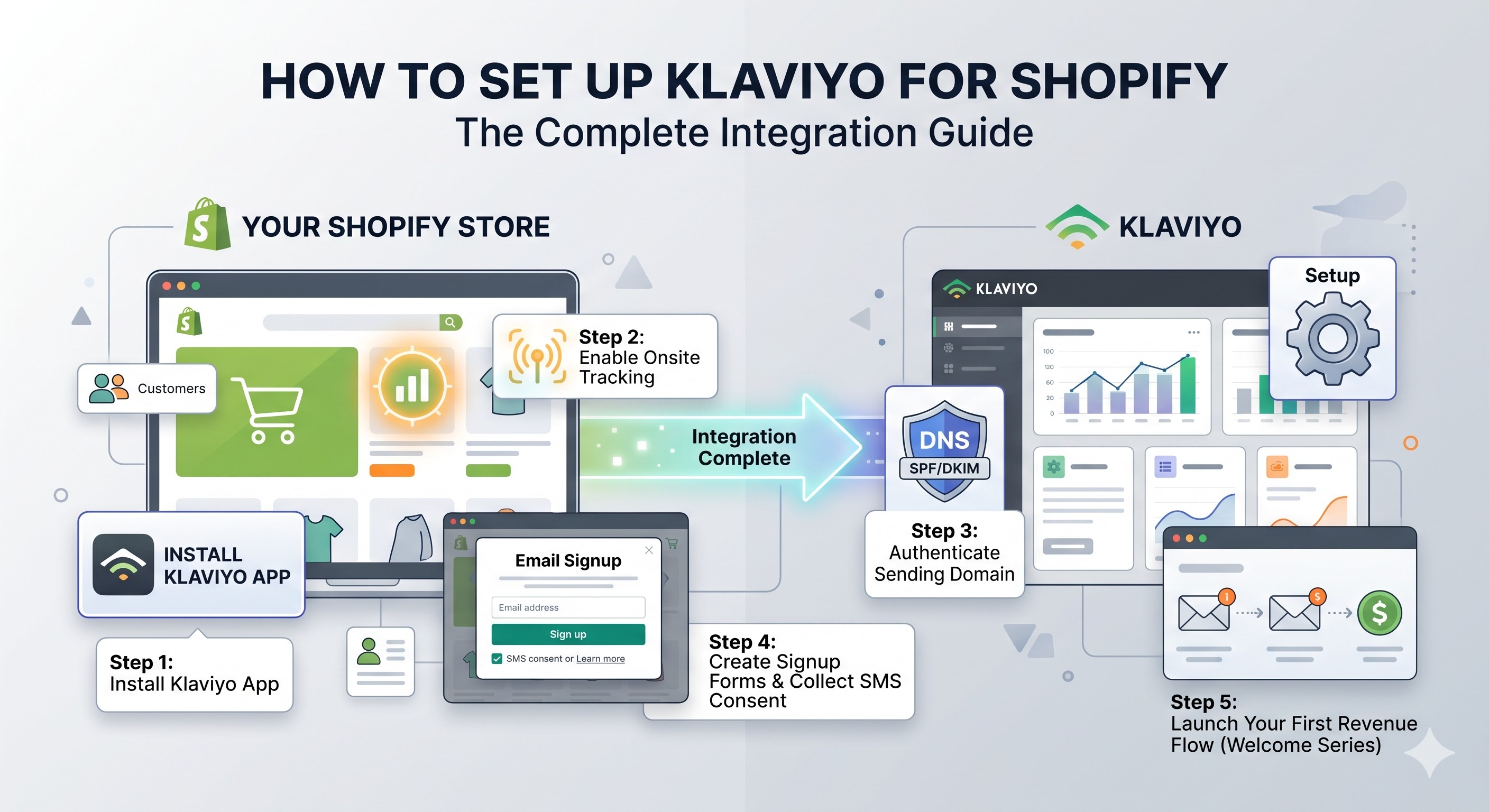
For Shopify stores using Klaviyo, multi-step forms are built directly into the form builder. You can design each step independently and track conversion rates at each stage to identify where drop-off occurs.
SMS Collection: Capturing Phone Numbers Alongside Email
SMS marketing has exploded in ecommerce over the past few years, and your popup strategy should account for capturing phone numbers alongside email addresses. SMS open rates exceed 90%, and the click-through rates dwarf email. But collecting SMS subscribers requires a different approach than email because of both regulatory requirements and subscriber expectations.
The most effective approach for Shopify stores is to add SMS collection as an optional step in your popup flow rather than requiring it alongside email. When you make SMS required, overall popup conversion drops because the perceived commitment doubles. When SMS is an optional second step after email capture, you preserve your email conversion rate while capturing SMS consent from the 30% to 50% of subscribers who are willing to provide it.
Your SMS value proposition needs to be distinct from your email value proposition. If both channels offer the same thing, there is no reason for a subscriber to opt into both. Position SMS as the channel for exclusive flash sales, early access, and time-sensitive offers that email subscribers will not receive. This gives subscribers a genuine reason to share their phone number.
Compliance is non-negotiable with SMS marketing. The Telephone Consumer Protection Act requires explicit written consent before sending marketing text messages. Your popup must clearly state that by providing their phone number, the subscriber agrees to receive marketing text messages. Include messaging frequency and a link to your privacy policy. Klaviyo handles much of this compliance automatically, but you need to ensure your popup language meets the requirements.
Track the lifetime value of subscribers who opt into both email and SMS versus email-only subscribers. In most cases, dual-channel subscribers have significantly higher customer lifetime value, which can justify more aggressive offers to incentivize SMS opt-in.
Measuring Popup Performance: The Metrics That Matter
Most store owners look at a single metric for popup performance: conversion rate. While conversion rate is important, evaluating popup effectiveness requires a more nuanced set of metrics that account for both list growth and impact on the overall shopping experience.
Popup conversion rate, the percentage of visitors who seethe popup and submit their email, is your primary performance indicator. Benchmarks vary by industry, but most Shopify stores should target 3% to 6%conversion rate. Below 3% indicates an underperforming offer or design. Above8% is excellent and suggests your targeting and offer are well-aligned.
Display rate, the percentage of total site visitors who see the popup, is equally important because it determines the total volume of signups. A popup converting at 8% that only shows to 10% of visitors may generate fewer total signups than a popup converting at 4% that shows to 50% of visitors. Balance your targeting rules against the total addressable audience.
Impact on site conversion rate is the metric most storeowners neglect. Compare your ecommerce conversion rate on days when the popup is active versus inactive. A well-designed popup should have neutral to positive impact on site conversion because the discount offer can motivate purchases. If your popup is hurting site conversion, it is too aggressive or poorly timed.
Close rate tells you what percentage of visitors dismiss the popup without submitting. A high close rate combined with a low conversion rate suggests the offer is not compelling enough. A high close rate with a decent conversion rate suggests the timing or targeting could be refined.
Revenue per subscriber is the long-term metric that tells you the true value of your popup strategy. Track how much revenue popup-acquired subscribers generate over 30, 60, and 90 days through email marketing. This metric helps you determine how much you can afford to spend in popup incentives while remaining profitable.
Conclusion: Building a Popup Strategy That Grows with Your Store
Effective popup strategy for Shopify stores is not about deploying a single form and hoping for the best. It is about building a system of targeted, well-timed, and compelling popups that capture email addresses from different types of visitors at different stages of the buying journey. Start with the fundamentals. Get your timing right with an exit-intent or time-delayed trigger. Create a compelling offer that stands out from the generic 10% discount. Design a clean, mobile-friendly popup that matches your brand identity. Then layer in advanced strategies like multi-step flows, visitor targeting, and SMS collection.
The most important thing is to test continuously. Every store has a unique audience, and what works for one may not work for another. Use Klaviyo's A/B testing capabilities to systematically improve each element of your popup strategy over time. The stores that consistently achieve the highest list growth rates are the ones that treat their popup strategy as an ongoing optimization project rather than a one-time setup.
Explore other Latest Blogs & Insights


Let’s build email marketing that feels like it was done in-house.