.avif)
Ecommerce Email Marketing vs. SaaS and Service Businesses: Why the Strategy Is Completely Different

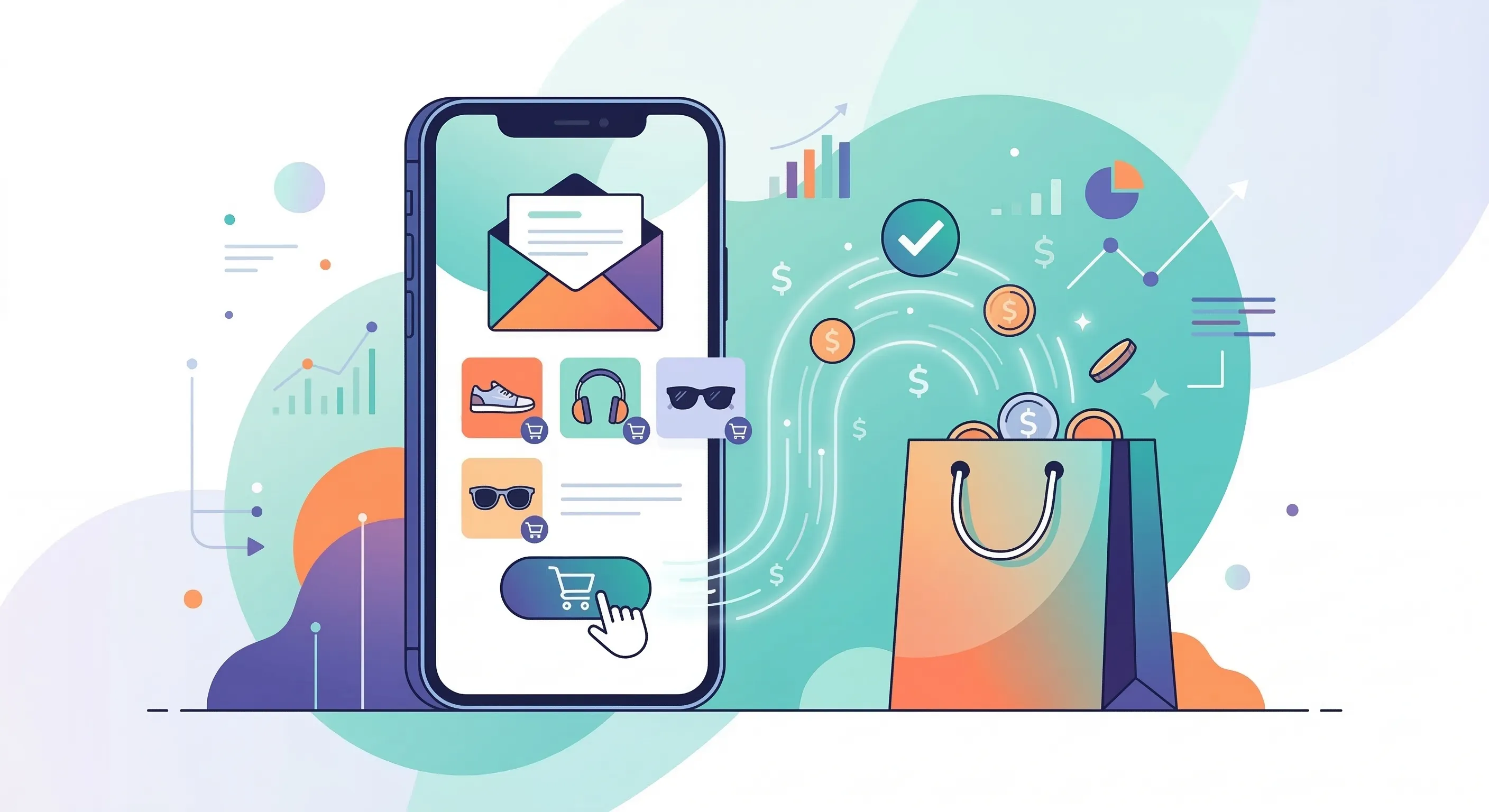
Ecommerce email marketing generates an average of $36 to $45 for every $1 spent, according to Litmus. But that number means nothing if you're running ecommerce emails with a SaaS playbook or a service-business mindset. The goals, the automations, the metrics, and the entire strategic framework are fundamentally different across these three business models. If you run a Shopify store and your email strategy feels borrowed from a different world, it probably is.
This guide breaks down exactly how ecommerce email marketing differs from SaaS and service-based businesses, why those differences matter for your revenue, and what a Shopify brand should actually focus on inside Klaviyo.
The Core Goal Is Different for Each Business Model
Every email you send should tie back to a business objective. The problem is that the primary objective shifts dramatically depending on whether you're selling products, software, or services.
Ecommerce email marketing exists to drive direct purchases and repeat buying behavior. The goal is transactional at its core. You want someone to open an email, click through to your store, and place an order. Secondary goals include increasing average order value through cross-sells, extending customer lifetime value through repeat purchases, and recovering abandoned revenue. Every email either generates a sale or moves someone closer to one.
SaaS email marketing is built around product adoption and churn prevention. The primary goal is getting users to activate (actually use the product after signing up), converting free trials to paid subscriptions, and keeping paying subscribers from canceling. Revenue happens through monthly recurring subscriptions, not one-time purchases. A SaaS company measures success in MRR (monthly recurring revenue) growth and churn rate reduction, not placed orders per email.
Service businesses (think HVAC companies, law firms, fitness studios, cleaning services) use email to generate bookings and stay top-of-mind between appointments. The conversion action is scheduling a consultation, booking a service call, or renewing a contract. The sales cycle is often longer and more relationship-driven, and email serves as a trust-building tool more than a direct revenue channel.
These aren't subtle differences. They change everything about what you send, when you send it, and how you measure whether it worked.
Different Automations for Different Revenue Models
Automation is where the gap between business models becomes most obvious. The triggers, timing, and content of automated emails look completely different across ecommerce, SaaS, and services.
Ecommerce Automations Are Revenue Machines
In ecommerce, automated flows are the primary revenue engine. Klaviyo's benchmark data shows that while email campaigns account for about 94.7% of send volume, flows generate nearly 41% of total email revenue from just 5.3% of sends. That means automated flows produce roughly 18x more revenue per recipient than one-off campaigns.
The core ecommerce flows include abandoned cart recovery (averaging $3.65 revenue per recipient), welcome series for new subscribers ($2.65 RPR on average), browse abandonment for window shoppers, post-purchase cross-sells and review requests, winback campaigns for lapsed customers, and back-in-stock alerts. Each of these flows triggers based on a specific shopping behavior: someone added to cart but didn't buy, someone viewed a product page, someone made their first purchase. The data comes directly from your Shopify store into Klaviyo, and the emails fire automatically based on what people do (or don't do) on your site.
SaaS Automations Focus on Activation and Retention
SaaS email automation looks nothing like this. The critical automations for a software company revolve around onboarding sequences that guide new users through product setup, trial-to-paid conversion emails that demonstrate value before the free period ends, feature adoption campaigns that highlight tools users haven't discovered yet, churn prevention emails triggered by declining login frequency, and expansion revenue emails that upsell users to higher-tier plans.
The triggers aren't shopping behaviors. They're product usage signals: Has the user completed onboarding? Did they log in this week? Have they used the core feature? Are they approaching their usage limit? SaaS email platforms like Customer.io or Userlist are built to track these in-app behaviors, which is why tools like Klaviyo (built for ecommerce purchase data) aren't typically the right fit for SaaS companies, and vice versa.
Service Business Automations Drive Bookings
Service businesses use a much simpler automation stack. The key flows include appointment reminders and confirmations, post-service follow-ups requesting reviews, seasonal reminders (your HVAC tune-up is due, time for your annual dental cleaning), re-engagement campaigns when a client hasn't booked in a while, and referral requests from satisfied customers.
The trigger data is appointment-based, not behavior-based. And unlike ecommerce, where you can dynamically populate product images and prices into emails, service emails tend to be more text-driven and relationship-focused.
The Metrics That Matter Are Not the Same
Open rates and click rates are universal, but the metrics that actually define success vary wildly between models.
Ecommerce: Revenue Per Recipient Is King
For Shopify brands, the metrics that matter most are revenue per recipient (RPR), placed order rate, and email-attributed revenue as a percentage of total store revenue. These are direct, bottom-line numbers. Across the Shopify stores we manage at CartStrings, healthy email programs typically attribute 25-35% of total store revenue to email. Klaviyo makes this attribution straightforward, tying every placed order back to the email or flow that influenced it.
Other critical ecommerce email metrics include cart recovery rate (what percentage of abandoned carts convert after receiving the flow), list growth rate from popups and opt-in forms, and repeat purchase rate driven by post-purchase automations. The entire measurement framework centers on dollars generated per email sent.
SaaS: Activation Rate and Churn Trump Everything
SaaS email success is measured in activation rate (percentage of new signups who reach "aha moment"), trial-to-paid conversion rate, net revenue retention, and churn reduction. Open rates and clicks still matter, but only as leading indicators of whether your onboarding emails are actually getting users to adopt the product. A SaaS company could have a 50% email open rate and still be failing if those users aren't converting to paid plans.
According to HockeyStack's analysis of 21.5 million emails across 152 B2B SaaS companies, email marketing contributes to roughly 1.1-1.3% of total marketing qualified leads, but those leads convert 11.3% faster than the blended average. The value isn't in immediate sales. It's in accelerating a longer decision-making process.
Service Businesses: Bookings and Retention Rate
Service companies track bookings generated from email, client retention rate, and repeat service frequency. The ROI calculation is simpler in some ways (did the email lead to a booked appointment?) but harder to attribute because the conversion often happens over the phone rather than through a trackable online checkout.
Email Content and Design: Three Different Approaches
What goes inside the email changes based on the business model too.
Ecommerce Emails Are Visual and Product-Driven
Ecommerce emails are built around product imagery, pricing, and clear "Shop Now" calls to action. A well-designed Shopify email in Klaviyo pulls in dynamic product blocks showing items the customer browsed, personalized recommendations based on purchase history, and urgency elements like low stock alerts or sale countdown timers.
The design is heavy on visuals. Product photography does the selling. Copy is concise and benefits-focused. And every email has a direct path to purchase, whether that's a deep link to a product page, a pre-loaded cart, or a discount code.
SaaS Emails Are Educational and Feature-Focused
SaaS emails tend to be plainer in design, often resembling personal 1:1 messages rather than branded newsletters. The content focuses on how-to guides for specific features, customer success stories, product update announcements, and tips for getting more value from the software. Many SaaS companies intentionally avoid heavy design because a simple text email from a customer success manager feels more personal and drives higher engagement than a polished marketing template.
Service Emails Are Trust-Builders
Service business emails focus on expertise, testimonials, seasonal tips, and community connection. A plumber might send an email before Thanksgiving with tips on avoiding garbage disposal disasters. A fitness studio might share workout tips and member spotlights. The goal is to demonstrate competence and stay in the customer's inbox (and mind) between service appointments.
Why Ecommerce Brands Need Ecommerce-Specific Tools
This is where the practical implications hit hardest. The tools built for SaaS email marketing (like Customer.io, Userlist, or Encharge) are designed to track in-app user behavior, manage trial conversions, and reduce churn through product-usage triggers. They're not built to pull in Shopify product catalogs, dynamically populate abandoned cart items, or calculate revenue per recipient based on placed orders.
Similarly, the tools built for service businesses (like ServiceTitan or Housecall Pro's email features) are designed around appointment scheduling, technician dispatching, and seasonal campaigns. They don't handle browse abandonment or product recommendation engines.
Klaviyo was purpose-built for ecommerce. Its native Shopify integration syncs customer purchase data, browsing behavior, and product catalog information in real time. The platform's flow builder is designed around ecommerce triggers: Added to Cart, Started Checkout, Placed Order, Viewed Product. Its segmentation engine lets you build segments based on purchase frequency, average order value, predicted customer lifetime value, and dozens of other ecommerce-specific data points.
When a Shopify store tries to use a generic email platform (or worse, a SaaS-focused one), they miss out on the ecommerce-specific automations that generate the majority of email revenue. Klaviyo's benchmark data shows that abandoned cart flows alone average $3.65 in revenue per recipient, and the top 10% of welcome flows convert at a 10.53% placed order rate. Those numbers require deep ecommerce data integration that general-purpose platforms simply don't offer.
Campaign Strategy Differs Too
Beyond automations, the way each business model approaches one-off campaigns is different.
Ecommerce campaigns are heavily promotional: new product launches, flash sales, seasonal collections, restocks, loyalty rewards, and curated product roundups. Timing often aligns with shopping seasons (BFCM, Valentine's Day, Back to School) and inventory cycles. The best Shopify brands on Klaviyo segment their campaign sends tightly, sending to engaged subscribers based on purchase behavior and browsing history rather than blasting the full list. Segmented email campaigns consistently outperform full-list sends in open rate, click rate, and RPR.
SaaS campaigns center on product education: webinars, new feature announcements, case studies, industry reports, and community events. Promotional campaigns are rare compared to ecommerce. When they do happen, it's usually around annual plan discounts or seasonal pricing offers, not weekly sales.
Service business campaigns tend to be seasonal and tip-driven: spring cleaning reminders, winter preparation checklists, holiday scheduling windows, and educational content that positions the business as an expert. Frequency is typically lower (monthly or bimonthly) because the relationship is less transactional than ecommerce.
Deliverability Considerations Vary by Model
Even email deliverability has different dynamics depending on the business type. Ecommerce brands typically send at much higher volume than SaaS or service businesses, which means sender reputation management is more critical. A Shopify store sending 500,000 emails per month to promote a sale needs to worry about list hygiene, engagement-based segmentation, and proper authentication (SPF, DKIM, DMARC) far more aggressively than a SaaS company sending 10,000 onboarding emails.
Ecommerce also faces unique deliverability challenges around promotional content. Inbox providers like Gmail categorize heavily promotional emails into the Promotions tab, which affects visibility. The balance between promotional content and genuinely valuable content matters more when you're sending product-focused emails multiple times per week.
If your Shopify store's emails are landing in spam or seeing declining open rates, a deliverability audit can identify the root cause before it impacts revenue.
What This Means for Your Shopify Store
If you've made it this far, the takeaway is simple: ecommerce email marketing is its own discipline. It shares surface-level similarities with SaaS and service-business email (you're still sending emails to a list, after all), but the strategy beneath the surface is fundamentally different.
For Shopify brands, that means using ecommerce-native tools (Klaviyo over generic ESPs), building revenue-focused automations (abandoned carts, welcome series, post-purchase flows), measuring success in revenue per recipient and email-attributed revenue (not just open rates), designing product-driven emails with clear purchase paths, and segmenting based on shopping behavior and purchase history.
Generic email advice doesn't account for these differences. A strategy article written for SaaS companies will tell you to focus on onboarding and churn. A guide for service businesses will push appointment reminders and seasonal tips. Neither will tell you how to set up a browse abandonment flow in Klaviyo that pulls in the exact products a shopper viewed, with conditional splits based on whether they're a first-time visitor or a repeat customer.
That's the level of specificity ecommerce email requires. And it's exactly why Shopify brands that invest in ecommerce-specific email strategy, whether in-house or through a Klaviyo audit with an agency that lives in this world, consistently outperform those running a borrowed playbook from another business model.
Explore other Latest Blogs & Insights

Let’s build email marketing that feels like it was done in-house.